California Coconut Tree (Beccariophoenix alfredii)
California Coconut Tree also known as Beccariophoenix alfredii, or commonly known as the High Plateau Coconut Palm, is a rare and striking species of palm native to Madagascar. It is a member of the Arecaceae family and is prized for its resemblance to the coconut palm (Cocos nucifera), though it is better suited for cooler climates and higher altitudes.
However, while California Mediterranean climates in some areas can occasionally support it, true coconut palms have more successfully survived only in warmer tropical zones.
Below is a detailed description:
Taxonomy:
- Family: Arecaceae
- Genus: Beccariophoenix
- Species: Beccariophoenix alfredii
- Authority: Rakotoarin. & J. Dransf.
Habitat and Distribution
- Native Range: Endemic to the high plateaus of central Madagascar.
- Habitat: Found in rocky, well-drained soils at elevations of roughly 1,200–1,500 meters.
- Climate: Thrives in subtropical to tropical climates and can tolerate mild frosts, making it one of the most cold-hardy palms of its genus.
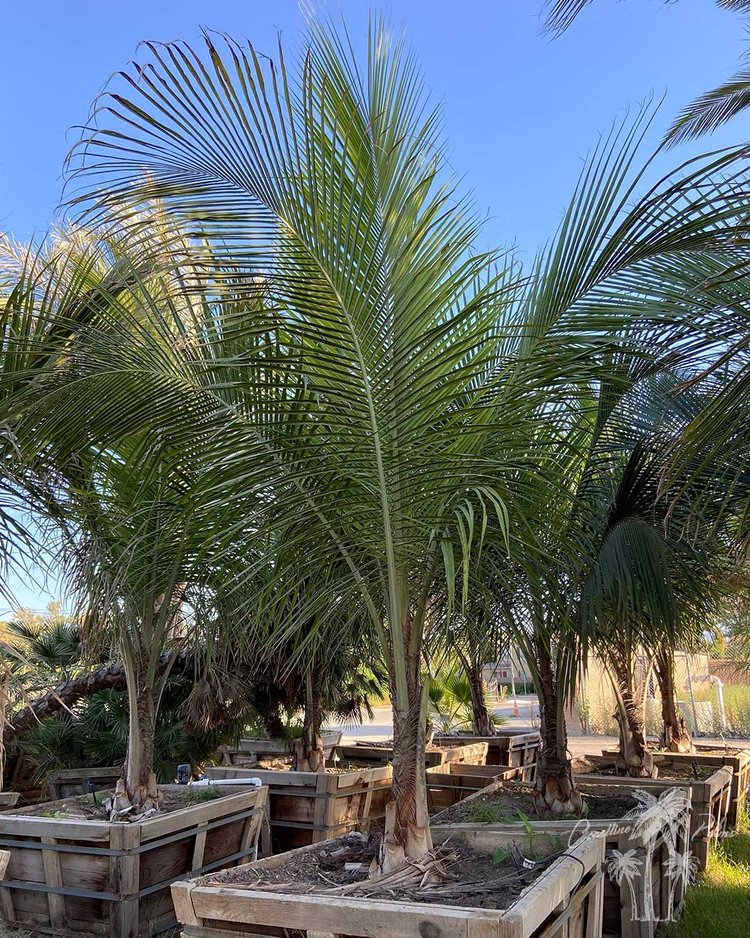
Physical Description:
- Trunk: Straight, solitary, and slender, reaching heights up to 10–15 meters. The trunk diameter is approximately 20–25 cm.
- Leaves: Pinnate, feather-shaped, with arching green fronds that can grow impressively long. The fronds are regularly arranged, giving the tree a symmetrical and graceful appearance.
- Crown: Dense and rounded, reminiscent of the coconut palm but smaller and more compact.
- Flowers: Monoecious and produced on a single inflorescence. Flowers are cream to pale yellow in color.
- Fruits: Oval, about 5 cm in size, turning reddish brown when mature.
Growth and Cultivation:
- Growth Rate: Moderate to fast, depending on environmental conditions.
- Soil Requirements: Prefers well-drained, sandy, or rocky soils with good organic content.
- Water Requirements: Requires regular watering but can tolerate short periods of drought once established.
- Light Requirements: Full sun to partial shade.
- Temperature Tolerance: Can withstand temperatures as low as approximately 25°F for brief periods.
Ecological and Cultural Importance:
- Conservation concern due to habitat loss from deforestation and land conversion.
- Valued for its resemblance to coconut palms and its ability to thrive in cooler climates unsuitable for Cocos nucifera.
Distinguishing Features:
Its ability to grow in cooler, higher-altitude environments sets it apart from many palms with a coconut-like look.
This remarkable palm is both a botanical treasure and a stunning addition to gardens, particularly in subtropical and tropical regions.